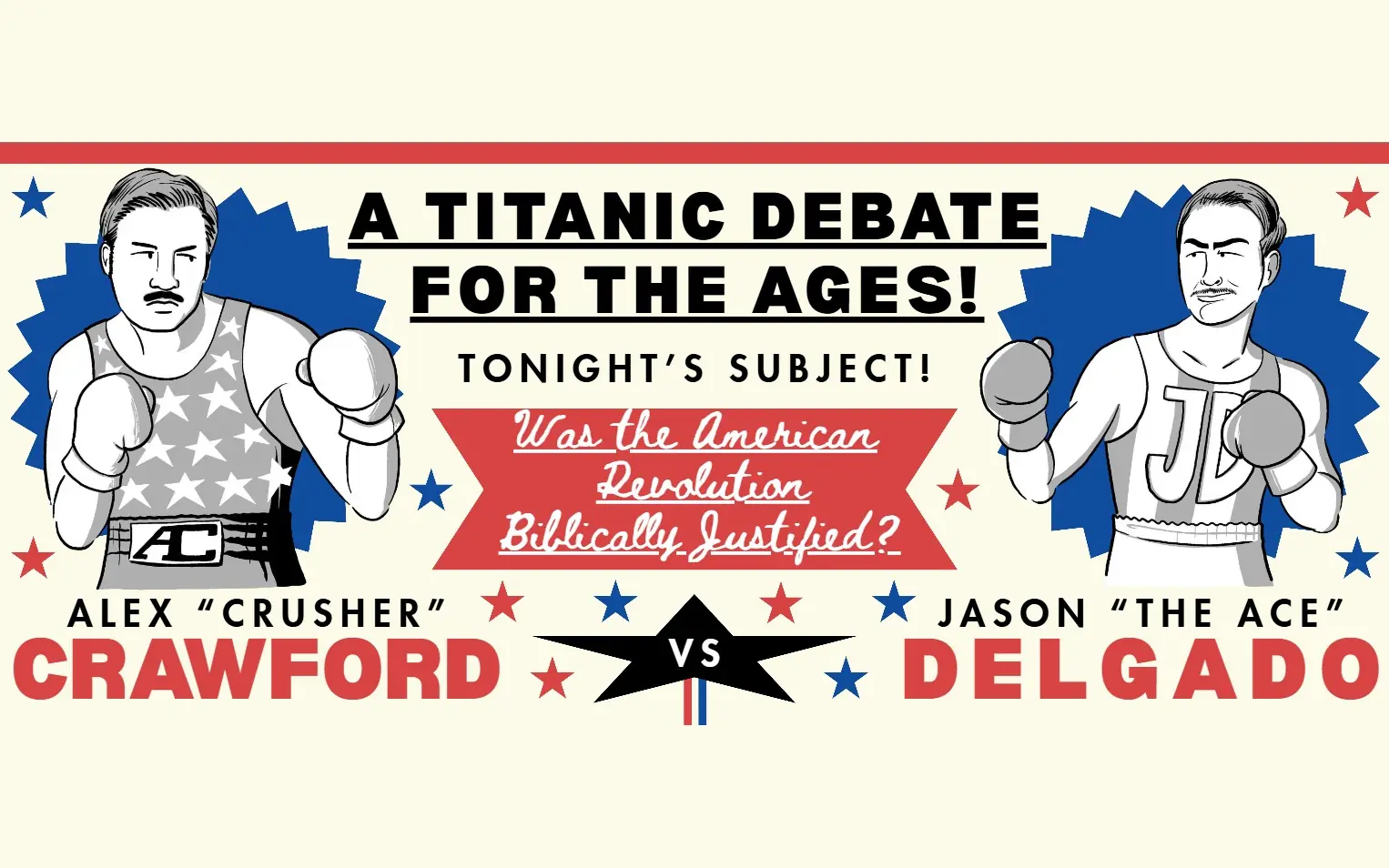
The American Revolution remains one of the most profound events in modern history, not merely as a political upheaval but as a moral and theological stand for human liberty under God. In recent years there has been a boom in popularity for the loyalist cause. This has come as a surprise to me, as it would seem many Americans would be proud of their nation’s heritage and struggle for independence. Among Christians, particularly those inclined toward loyalist sympathies, the Revolution is sometimes portrayed as an unjustified rebellion against divinely appointed authority. The American Revolution was not only biblically justified but necessary for the Church to thrive. It was a measured, constitutionally grounded defense of chartered rights and God-given liberties, infused with natural law and resistance theory, ultimately yielding a republic where faith and self-governance could flourish. First, I will address Romans 13, by far the most cited verse used by the loyalist cause. Paul commands believers to “be subject to the governing authorities.” This verse, like the entirety of the Bible, cannot be viewed in isolation.
We must take into account the context of the time and the entirety of Scripture. The Bible consistently presents civil authority as ministerial but never says it is absolute. Paul himself describes government as “God’s servant for your good” (Romans 13:4, ESV). Authority is therefore defined and justified by its purpose, to reward good and punish evil, not merely by its existence. Romans 13 appears to be an outline for what good government should be, not what every government is. Look at North Korea, for example; that is clearly a far cry from the state described in Romans. Governments and the concept of revolution need to be addressed on a case-by-case basis with prudence and common sense. When rulers cease to fulfill their duties and instead become instruments of coercion and injustice, they no longer fulfill their God-ordained function. Submission, in such cases, becomes complicity in disorder rather than obedience to God. The most iconic plea from this period is “no taxation without representation.” It is well known to us as Americans and was a rallying cry for the colonists at the time. Contrary to what some might tell you, this plea was not a demand for less
government authority but a reshaping of it. In the Stamp Act Congress of 1765, delegates from nine colonies declared it “inseparably essential to the freedom of a people, and the undoubted rights of Englishmen, that no taxes should be imposed on them, but with their own consent, given personally, or by their representatives.” Colonial charters and the Magna Carta affirmed self-governance; Parliament’s Stamp Act, Townshend Duties, and Tea Act violated this compact by extracting revenue for imperial wars without consent. The colonists did not want to leave the British Empire; they wanted self-governance and greater autonomy. Critics will note that Parliament repealed the Stamp Act in 1766 amid colonial boycotts and economic pressure on British merchants. Surely this is a sign they took the pleas of their colonists seriously? No. This concession was hollow and without empathy for the colonial situation. Their only wish was to placate the colonists into submissiveness. On the very same day, Parliament passed the Declaratory Act, which asserted its “full power and authority to make laws and statutes of sufficient force and validity to bind the colonies and people of America… in all cases whatsoever.” This sweeping declaration nullified colonial resolutions questioning parliamentary supremacy and affirmed the right to legislate and tax without limitation. It showed how Britain viewed the colonies as subordinate possessions rather than partners sharing English liberties. If Parliament had “full authority…in all cases whatsoever,” then colonial rights were not secure but conditional, and therefore not true rights at all. The 1774 Intolerable Acts escalated coercion: closing the Boston Harbor, suspending assemblies, and quartering troops without consent. These were not benevolent fiscal policies but tools of subjugation. The Crown and Parliament viewed the colonists as second-class citizens, while the colonists viewed themselves as full Englishmen and British subjects. The Crown had no issues ordering these colonists to die in their wars but drew the line at self-governance and representation. When rulers become tyrants by either commanding injustice or usurping divine order, resistance may become necessary, though it must be measured, lawful, and oriented toward restoring justice.
Scripture teaches that “we must obey God rather than men” (Acts 5:29, ESV). Despite what some loyalists may tell you, there is great precedent for Christian resistance to corrupt or tyrannical governments. Thomas Aquinas argued that tyrants who deviate from the common good forfeit legitimacy and may be resisted prudently to restore justice. John Calvin, in his Institutes of the Christian Religion, permitted lesser magistrates to resist rulers commanding evil, preserving the office while opposing the tyrant. The American resistance was not anarchic but led by established colonial legislatures, assemblies, and intercolonial congresses. This aligns closely with Calvin’s doctrine of lesser magistrates, in which duly constituted authorities may interpose themselves between a tyrannical ruler and the people. Locally elected representatives and magistrates helped organize and fund the revolution. Had it been just a disorganized rabble of rioters, it would have failed spectacularly. Its success was rooted in its structure and divine providence. The Revolution’s results cannot be denied. Religious liberty flourished without monarchical establishments, birthing a republic where faith and selfgovernment thrived under Providence. Loyalist portrayals exaggerate British benevolence while ignoring primary evidence of coercion and the Declaratory Act’s clear intent to assert unchecked power. The British took advantage of the colonies and forgot these were people, not just subjects. As Reformed thinkers recognized, true authority serves the common good; when perverted, measured resistance honors God. These lessons and the story of the Revolution can still teach Christians today. They must recognize the difference between submission and complicity. With Holy Scripture as our guide, we can discern when the time is right for war or peace. This was not rebellion against authority but its rightful defense, a model of prayerful, principled statesmanship that advanced justice for generations. The American Revolution, rightly understood, was not a rejection of authority but a reassertion of its proper limits under God. It stands within a long Christian tradition that recognizes that while government is ordained by God, no government can replace Him.