The conflict in Ukraine continues as the third year of combat only intensifies. The international community has witnessed 38 months of intense combat, followed by the advancement of weapon utilization. New technologies continue to be developed to further the fighting on both sides. Russia still occupies roughly 20% of eastern Ukraine, holding the Crimean Peninsula, Luhansk, and Donbas regions (Centre for Preventive Action, War in Ukraine Global Conflict Tracker, September 15, 2025).
Economically, Ukraine has received around $407 billion in foreign aid, with over $118 billion being given from the United States alone. At the end of 2021, Ukraine’s GDP grew by 3.4%. At the end of 2022, the GDP dropped 28.8%. Destruction of infrastructure and industry, labor shortages, and the loss of territory contribute to the loss of GDP and its growth. Thanks only to foreign investment, Ukraine ended 2023 with a positive 5.5%. The economy was supported by a stable consumer demand and construction, evidenced by retail trade, passenger transportation, and residential/non-residential construction.
Defense orders stimulated the development of certain industrial sectors, particularly machinery and arms manufacturing. Since the beginning of the full-scale invasion, all of Ukraine’s own state budget revenues have been used to finance defense, accounting for approximately half of the state budget (Maksym Samoiliuk, Ukraine War Economy Tracker).
In 2014, Russia annexed Crimea, resulting in numerous economic sanctions on export products produced in Russia. For Russia, these sanctions caused tremendous loss to their annual GDP. By 2020, they had almost returned to their pre-2014 GDP amount.
Thanks to the invasion, Ukraine’s GDP growth annually declined to almost -30%, with Russia being affected less in comparison (World Integrated Trade Solutions, GDP by Country in Current $USD, 2022).
In September of 2025, Ukrainian President Zelenskyy stated in an interview that Russia could now be targeted, referring to the lifting of range restrictions on certain weapons given to Ukraine by allies. Zelenskyy stated that hitting Russia’s oil refineries was the most effective sanction. These statements come amidst the introduction of a long-range ballistic missile being developed for use in the conflict. While Ukrainian reports dismiss the use of this new missile, video evidence suggests that the missile was used to strike a Russian Federal Security Service unit operating in Crimea.
Video evidence details the effectiveness of this missile, being capable of delivering up to 1 ton of explosives approximately 3,000 kilometers or 1,865 miles away. The Kremlin, home to President Vladimir Putin of Russia, is only 734.4 kilometers away from Kyiv as the crow flies (Yuri Lapaiev, Ukraine Ramps up Defense Production with Increased Cooperation, September 17, 2025).
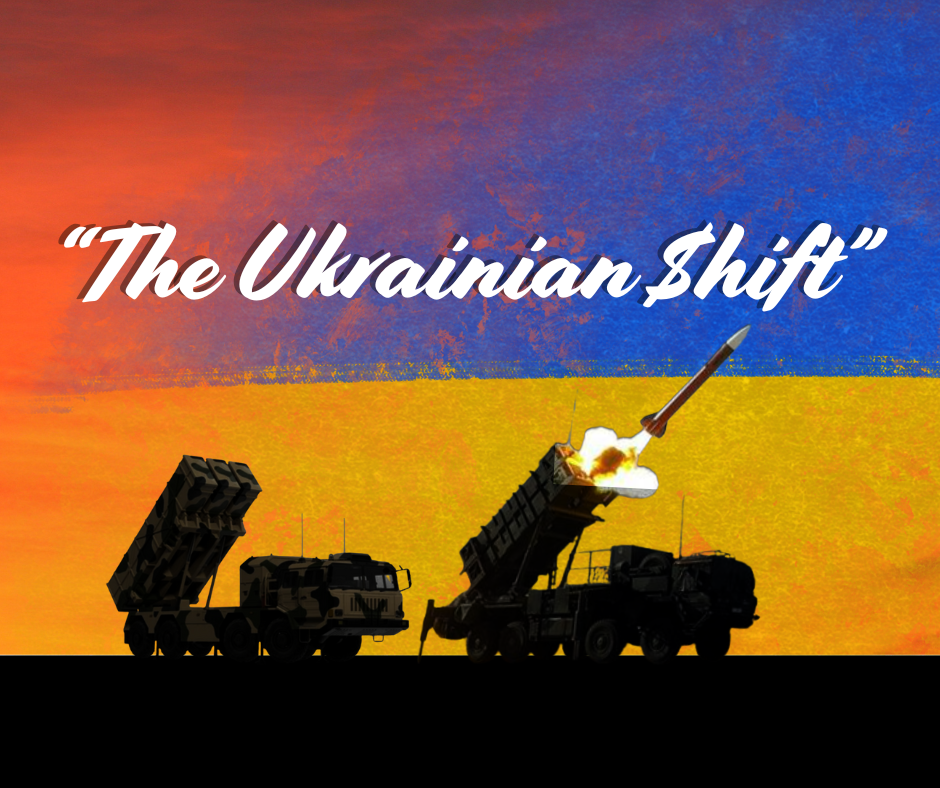
According to the Ministry of Defense, 80 new models of weapons and military equipment were approved for use by defense forces, with 78% being produced domestically. The Ukrainian Ministry of Defense has established a portal of services for arms manufacturers in Ukraine, including applications for preferential loans and grants, rapid prototype testing services, and component libraries. As of July 2025, eight foreign defense companies announced plans to develop joint enterprises with Ukraine. Kyiv is looking for international private firms to fund their wartime needs amid growing uncertainty in receiving continued aid from Western allies. Kyiv knows that the Ukrainian front offers an opportunity to test new weapons and experience real combat data with immediate feedback (Yuri Lapaiev, Ukraine Ramps up Defense Production with Increased Cooperation, September 17, 2025).
The conflict in Ukraine has inflicted over 40,000 civilian casualties, with 3.7 million being displaced internally and causing 6.9 million to flee the country (Centre for Preventive Action). So far, no signs of an end to the war have been shown from either side. With prices reported in Ukraine having increased by 12.3% since August 2024, inflation of the Ukrainian currency standing just below 15%, and no end in sight for either government, the international community will be put to the test in watching another horrific war stretch longer than it needs to.
If foreign action and international aid aren’t enough to satisfy the warmongering, could the death of Ukrainian and Russian nationals ever be worth any amount to determine who controls eastern Ukraine? (Maksym Samoiliuk, Ukraine War Economy Tracker).
In August of 2025, Trump met with President Putin in Anchorage, Alaska, to negotiate a ceasefire. Trump declared in a statement after the meeting that, “There’s no deal until there’s a deal.” No concrete ceasefire was organized following this meeting. Russia has reported Ukrainian drones targeting civilians within Russian territory while Ukraine continues to harass Russian oil refineries, depots, and gas processing plants (Centre for Preventive Action, War in Ukraine Global Conflict Tracker, September 15, 2025).
It’s clear that Ukrainian involvement of private defense contractors developing drone technology and new missile capabilities signals the continuation of the war in Ukraine, potentially into its fourth year. In early September, Zelenskyy signed a law launching the defense city initiative to support local weapons producers. Key features include exemptions from income, environmental, and land taxes. Coupled with the previously mentioned involvement of defense contractors, Ukraine has made it very clear that one of their goals for the near future in the war is to stimulate their economy using private firms to produce new and revolutionary technology.
# # #
Center for Preventative Action, War in Ukraine, September 15, 2025.
Yuri Lapaiev, Ukraine Ramps up Defense Production with Increased International Cooperation,
Karl Sexton, Ukraine: Zelenskyy threatens attack on Kremlin, Deutsche Welle, September 25, 2025.
Maksym Samoiliuk, Ukraine War Economy Tracker, Centre for Economic Strategy. World Integrated Trade Solutions. (2022). GDP By Country in Current $USD.